Showing posts with label literary plus. Show all posts

Tuesday, October 30, 2012

Guest Post, by A M Jenner: It's All in the Details


Sixth stop on my international blog tour, Dublin Ireland. Thanks so much to Paul Carroll for hosting me; it’s good to be here.

I'm sure we’ve all heard the old adage, "The devil is in the details". I've certainly found this to be true when writing novels. Some days it is devilishly tricky to strike the proper balance between too many details and not enough of the little beggars.

As an author, my job is to keep my reader totally engrossed in my story. I don't want them to put it down until they’ve finished it. When a reader finishes a book in one session, they become completely convinced that the book was "too good to put down". This leads to them telling their friends about the book that was too good to put down, which leads to more people who want to read my books.

As long as I can keep the reader's mind entirely inside of my story, there’s no danger of them putting the book down voluntarily. If they do have to put it down, I want them to be thinking about it, with their mind still in the story, until they have the opportunity to pick it back up.

In order to keep a reader that involved in a story, the place has to seem like a real place. The characters have to seem like real people. And the reader has to be able to relate the problems facing the hero.
What does that have to do with descriptive details? Everything!

If I put my characters in a car and send them someplace, it’s not very interesting if they’re traveling through a blank, gray wasteland. My readers’ minds will be wandering off, trying to figure out those background details I haven’t given. To keep that from happening, I have to provide some of the details of what is happening outside of the car.

Think about it. If you’re a passenger in a car, even if you’re involved in a conversation, you are peripherally aware of what is going on outside of the car. You’re aware of the landmarks you pass, red lights you stop at, and the idiot on the motorcycle who just cut you off. If I put some of these descriptors in between the lines of dialogue, it’s much more interesting to read and seems more like a real conversation.

At first novice writers might think that the more detail that’s included, the better the story will be. This is not true. Too many details are just as damaging to your readers’ attention span as too few. For example, if my character walks into an office for an interview, time is not going to stop while they examine every item in the office and describe it in their mind in loving detail. They’ll pick up the details a little at a time as various objects come to their attention.

As they first step through the door, they’ll notice the color and lushness of the carpet. When they greet the interviewer across the desk, they’ll notice the size and placement of the desk, and possibly what it’s made of, if it’s an unusual material. No one is going to consciously notice a plain metal office desk with Formica top, when they are busy being concerned with their upcoming interview. However, they might notice the beautiful hand-carved oak desk with a glass top to protect the carvings, simply because of its unusual construction.

They’ll probably not notice what the interviewer is wearing, unless they were worried about their own appearance earlier, and are comparing the two outfits in their mind. They will notice the one outstanding physical characteristic of the interviewer, however, whether it’s hair of an unusual length, style, or color, an overly large nose, eyes that don't match, or a prominent wart. Most characters should have one outstanding physical characteristic, which is mentioned often enough in the narrative to assist in identification.

What’s the right amount of detail to include? This is probably one of the most difficult questions to answer. A lot of it depends on the setting, not just of your novel, but of the particular scene within the novel. For example, most people have seen enough historical movies, that if the characters are in a large manor house, and I state they walk into the library, the reader can provide a picture of a large room full of books, probably containing a fireplace with a grouping of chairs nearby. However, if I have the character walk into the buttery, the reader is likely to conjure a picture of a small room with a wooden butter churn. A buttery is actually a small room near the dining room where plates, silverware, and other serving implements are kept handy. In this instance, a quick description of either the appearance or the use of the room is in order.

When I sent The Siege of Kwennjurat out to my beta readers, there were several places where they asked me for more details. There were also several places where they noted the action was too slow, and I therefore removed some of the details. In one place, I knew I had the mix exactly right, because one reader asked for more details while another was complaining there were too many. Learning how many details and where to put them is an ongoing process for every author.

About the book: The Siege of Kwennjurat is the second book in the Kwennjurat Chronicles. Alone in Kwenndara, Princess Tanella cares for the refugees from war-torn Jurisse, while she worries about her loved ones’ safety. Her new husband Fergan is two days away in Renthenn, coordinating the business of two kingdoms.

Kings Jameisaan and Fergasse join forces in Jurisse to pursue the war against the Black Army. They know Liammial hasn't played his last card, and are willing to give their lives to protect their people and their children.

Who will triumph and claim the throne of Kwennjurat?

About the author: A M Jenner lives in Gilbert, Arizona, with her family, a car named Babycakes, several quirky computers, and around 5,000 books. A self-professed hermit, she loves to interact with her readers online. Her books are available at www.am-jenner.com, as well as most major online retailers.


Friday, August 31, 2012

Guest Post by Sophie Duncan: The Sidekick - Plucky, Loyal and Just a Tad Annoying


Well, it's double thanks to Paul today, 1 for hosting me and 2 for organising this blog tour (and thanks to Literary+ for making it possible).
The Sidekick - Plucky, Loyal and Just a Tad Annoying :).

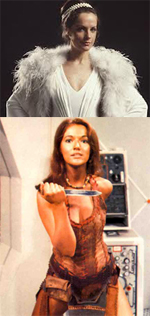
Romana and Leela

Ever since I was little, I've always been a fan of sidekicks. Maybe it's because I grew up watching Dr Who, a show in which the Doctor's companions are very important. I always missed them in the episodes when the Doctor was alone. I was exposed to my first kick-arse woman in Dr Who, Leela, the Sevateem warrior who liked her Janus thorns just a little too much. I also love Mary Tamm's Romana, but I only got to watch her in reruns, I was too young to watch the shows on the TV. The Doctor's companions used to have to put up with quite a lot and I liked it when they managed to get one up on him.


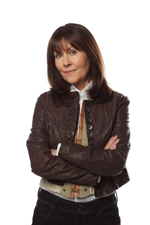
Sarah Jane Smith

The Doctor and his companions is the classic power dynamic between hero and sidekick: the hero knows more, is generally better at stuff and is frequently explaining things to his/her younger companion and thus explaining things to the reader/viewer. However, because there were so many companions, Dr Who did get to crack the mould. The Doctor remained (mostly) in charge, but the likes of Sarah Jane Smith could make their mark and stepped out of the Doctor's shadow, especially so with Sarah Jane, who eventually had her own series.

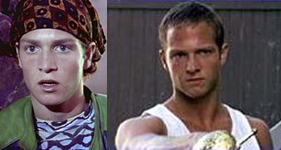
I was being flippant with my title when I described the sidekick as annoying, it's not a universal truth, although I have to admit, some have turned out that way, or at the very least started that way. A character I loved as a child, Adric, again from Dr Who, annoys the hell out of me as an adult, I just want to smack him over the head for being willful, childish and arrogant. Richie Ryan from Highlander The Series, in the first episode I saw, I wanted to take a sword to his neck, but he grew on me, so much so, I preferred him to The Highlander himself. Richie is an example of a sidekick growing beyond the role in which he starts. There were five seasons of Highlander (well, okay there were six, but some of us don't talk about #6) and Richie grew from rebellious teenager, there to generally get in trouble so Duncan could moralise at him, to a mature, independent immortal who then began to lose his usefulness for the writers, because he was too like the other immortals in the show. Personally, I liked the adult Richie, he was a sidekick who came of age, someone who could stand up to McLeod, a more modern companion.

Richie Ryan

Richie was not the first sidekick to do this, we have the likes of Robin becoming Nighthawk in the Batman comics as well. And maybe in written media, comic serials and book series that run over a longer time-frame than TV, sidekick growth is easier to accommodate and you also don't have to worry about the actor getting older, either. I suppose my sidekick character in Death In The Family is Sean, he's younger than my protagonist, Tom, but they share common goals and Tom feels protective towards him. I certainly see him growing and changing over the sequels, after all, he is currently fourteen, a time of transition from child to adult. In fact, I intend his evolution to be as much part of the story dynamics as Tom's. I won't be using him as a stooge, nor as an example of how not to do things, the sidekick in modern literature is far more sophisticated than the 2D characters of old TV, e.g. Scrappy-Do from Scooby-Do, Vince Romano from TJ Hooker, Penfold from Dangermouse.

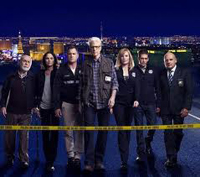
CSI

Unlike the aforementioned traditional sidekicks, who were generally stuck in their ways with a particularly annoying catch-phrase if you are really lucky, Sean does get to take the lead in some things, he knows more about their mutual condition than Tom does and at least in the beginning, he is the stronger character. Modern sidekicks are more than there for the 'but why Doctor's of old. In fact, a lot of stories are moving to the ensemble model where there is not such a distinction between leader and supporter. In TV, this can be seen in the likes of CSI, where there is always a lead figure, but the sidekicks, or rather, subordinates are no longer on the side, they have almost as big a role in proceedings as the head honcho. There are, of course, always the mentor-mentee moments, providing the classic one-on-one learning experiences, but there is not so much of the subordinate being there just to get it wrong so the hero can show them how it's done, because *gasp* in our modern world, even heroes are allowed to be fallible.

Lord of The Rings

Ensemble structures are not something I've played with a lot in my writing, I suppose the classic is the fantasy quest adventure, the likes of J R R Tolkein's Lord of The Rings, where there are many characters each striving for the one goal. I tend to veer towards one or two characters when I'm writing, so this group dynamic is a challenge for me, making sure each character has enough 'air time' and this style of story lends itself to an omnipotent view point, also not a narrative mode I go for. Still, I do have a short story that I released for The Wittegen Press Giveaway Games, Samling Born, that will be developing into an ensemble format novel, so I better get practising.

Stein and Candle Detective Agency

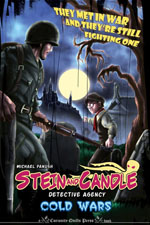
Despite the rise of ensemble shows on TV, I don't believe the hero-sidekick relationship will go away, especially not in written format. There is still something to say for the best-friends and/or master-student relationships that this dynamic creates. Much good literary material lies in 'wise sage give young apprentice advice' and, in modern relationships, the inverse is also true, teachers can learn from their pupils. I think, due to the flexibility of our format, a novel writer can develop a much more nuanced and intimate relationship between characters than a forty-five minutes a week TV show and the sidekick has his or her role to play in many stories. They are there to: help the reader learn about the environment the author is creating; maybe lighten the mood from time to time; keep the hero on the straight and narrow (there is a particularly good example of this in The Stein and Candle Detective Agency #2: Cold Wars where Weatherby makes his opinions known to Mort when Mort's actions become questionable).

I think the role of the sidekick can be summed up by saying that they, more often than not, provide the humanity a story needs. Your hero/protagonist can be a psychotic bastard, as many of the darker superheroes can be from time to time, if you have that small breath of loyal, earnest humanity in the form of the, yes I'll use the term, plucky sidekick.
Sophie Duncan


Sophie was born with the writing bug in her blood, boring her primary school teachers with pages of creative writing and killing her first typewriter from over use when she was thirteen. She began publishing her work on line while at university where she discovered the internet and fanfiction. It took another decade for Sophie to realise her long-time dream of releasing her own original fiction as an author through Wittegen Press.
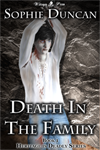
Death In The Family (Heritage is Deadly #1)


Leaving a good London school with solid prospects, Tom Franklin has the world at his feet. Yet one thing has always haunted his perfect life: his dreams. When Tom discovers that the nightmarish images of dark places and even darker instincts are in fact repressed memories from his early childhood, he must face the heritage from his birth-father, a savage vampire known only as Raxos.
Realising his memories are his only hope of controlling his awakening instincts, Tom returns to, Coombedown, the sleepy, Cornish village in which he was born, unknowing that the night-breed in his veins will lead him into danger.
Death In The Family is a young adult, paranormal novel.


Death In The Family Literary+ Blog Tour Schedule:


Literary+ is a mar­ket­ing ini­tia­tive which was founded and led by Shen Hart. This is a time of evo­lu­tion and progress, the mar­ket is being opened up to e-books and self-publication. As a fel­low writer, Shen under­stands that self-publication is a hard and often lonely road. She started Lit­er­ary+ to bring together authors and related cre­ative spe­cial­ities with the goal of help­ing each other. With a tight knit, friendly and wel­com­ing com­mu­nity at its core, Lit­er­ary+ holds a strong focus on mar­ket­ing. As Lit­er­ary+ con­tin­ues to grow and evolve it will use inno­vat­ing, orig­i­nal and exper­i­men­tal mar­ket­ing meth­ods and schemes to get its member’s books into their reader’s hands.

Tuesday, July 10, 2012

Guest Post, by Shen Hart: Bringing Your Characters to Life

A good friend of mine from Google+, Shen Hart, is here today with a post about bringing your characters to life! I'm extremely grateful to Shen for putting the time into writing this, in the midst of a day job and running a new writing group, Literary+. You can find out more about both Shen and Literary+ beneath her post.

***

Bringing Your Characters to Life

Your story is nothing without your characters. It cannot happen without them. Therefore, it's rather important that you write characters with depth, feeling. You need to bring them to life. Of course it's entirely up to you how you view this, some people may prefer to think of themselves as a puppet master, others as a director. Whatever works for you.

The key part, in my mind, is knowing your characters inside out. You need to look past their rough physical appearance and favourite fruit. What is their history? What's that one thing which keeps them up at night? To really bring them to life, they need to be real on some plane or level of existence. You're probably thinking 'but the reader doesn't give a damn what happened on Bob's fourth birthday'. Yes, you're probably right. However! You need to know that his fourth birthday party was the time when his relationship with his father started to twist and falter. It was in that moment, that things changed. That, is the reason that Bob is about to start the zombie apocalypse.

What is my actual point and methodology here? Stop thinking of your characters as just words on a page. See them as people which you need to know inside out. They can be your best friends, your arch nemesis, whatever role they need to fill in your life. Treat them like a psychology project. Personally, I do it like this: I'm a very visual person. So I choose a character, form the scene in my mind then press play. I watch it like a movie. I see every little detail, the slight shift in weight, the glance over at the faded photograph. I hear that rise at the end of the last word, the change in breath and skipped heartbeat. Then I poke. I square up to them and demand to know why. Sometimes I prefer more... torturous methods but that's for a different post.

The summary here? Get to know your characters on every possible level. Understand what makes them tick, why they're like that. That will bring them to life and make them leap off the page and grab your readers

***


About Shen:

Shen Hart is a passionate, hot-headed English writer. When she isn't torturing her characters in deviously dark manners she spends time with her horses. She has a penchant for twists and has been called 'cheek incarnate' on many occasions...

Shen founded Literary+ as a combination of her desire to help fellow self-published authors and her love of marketing and challenges. 

Shen blogs here:  http://tiaden.wordpress.com/

About Literary+:

Literary+ is a writer based project brought together and lead by Shen Hart. It brings together passionate, quality self-published writers to help each other promote their work, bringing more readers to every member. It was sparked by the simple fact that there are many top quality self-published authors being over-looked because they do not have the time and resources to efficiently and effectively market and promote themselves. With ambition and passion, Literary+ will take its members to the heights they deserve through a tight-knit community of like-minded writers.

You can access the Literary+ website here: https://sites.google.com/site/plusliteraryplus/home